Legendary Multi-Strategy Review: Under the "Collective Intelligence" Pitch Sits a Grid-Averaging Engine
Legendary markets 12+ strategies behind a 5-layer filter as 'AI collective intelligence,' but its core position management is grid + lot advancement. A professional look at the framing-vs-mechanism gap.
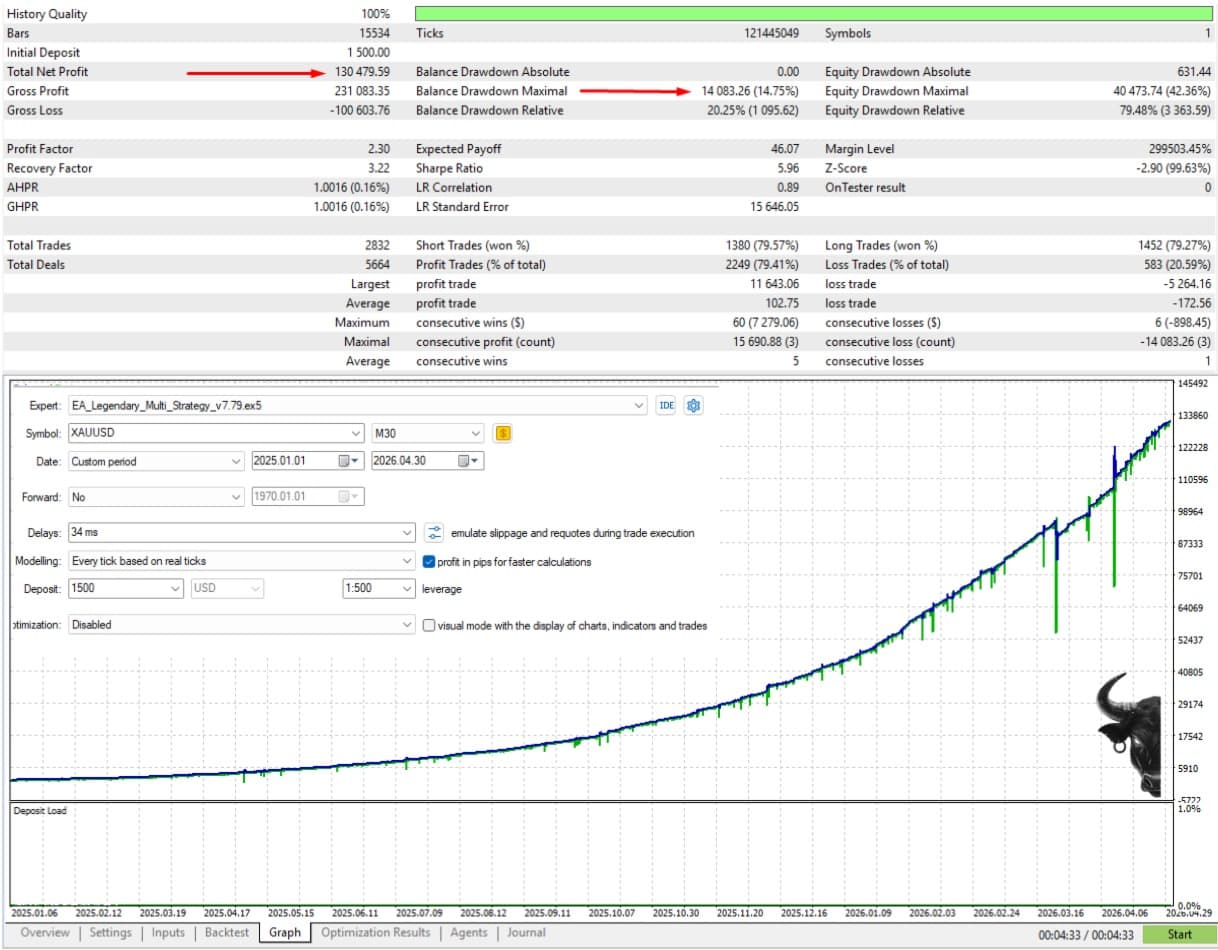
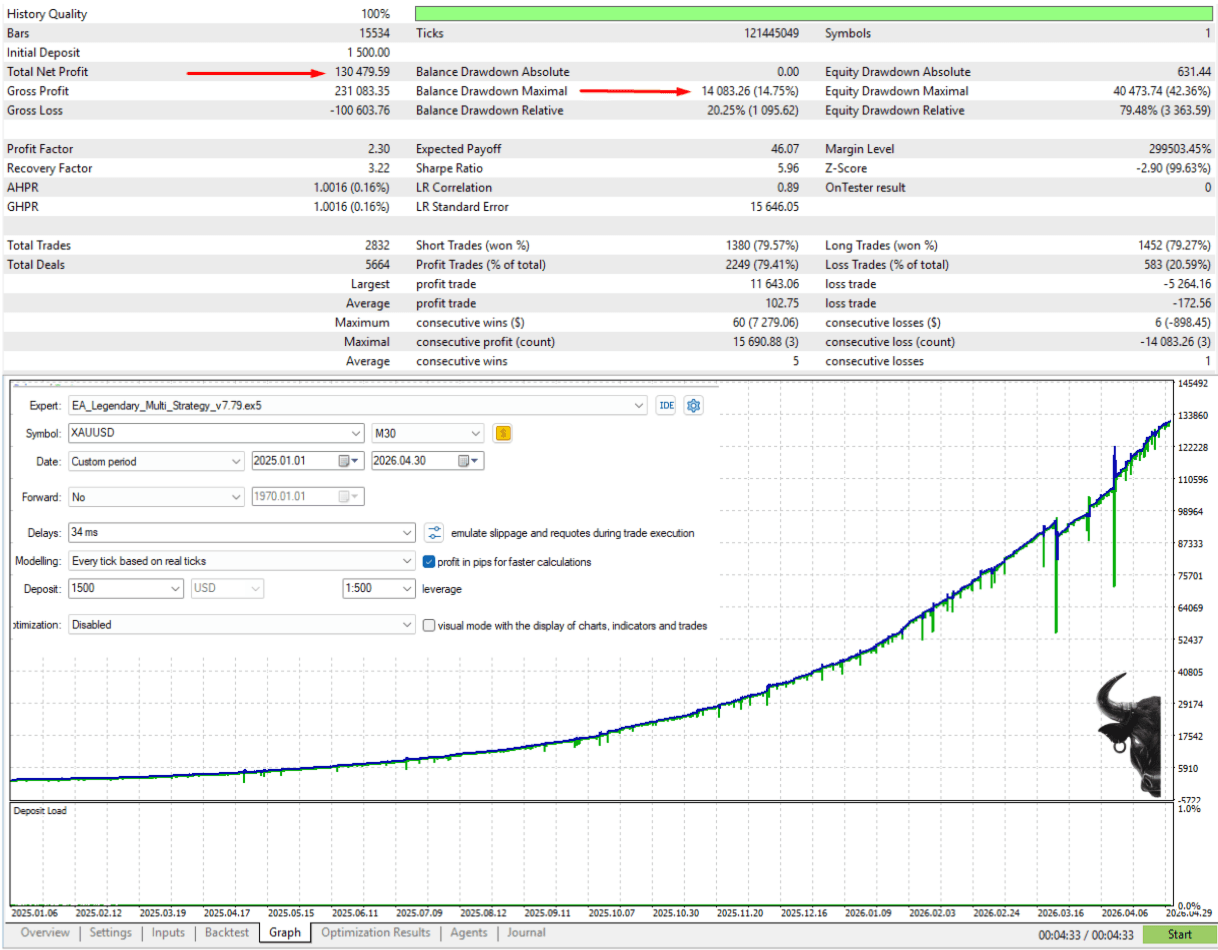
Author: Vitali Vasilenka. The point of this review isn't "is it good" — it's that there's a seam between its marketing and its actual mechanism that you need to see through, which is exactly the due-diligence muscle a professional should train.
The pitch: what it wants you to remember
The page leads with 12+ independent strategies behind a 5-layer filter (HTF EMA trend, ATR volatility, RSI momentum, ADX>18 trend strength, a 3-bar anti-flood cooldown), firing only on multi-strategy confirmation, wrapped as "collective intelligence + AI precision" and "a quantum leap in algorithmic trading." It sounds like a cautious signal machine.
The mechanism: how it actually manages positions
But read to the end: its position management is an explicit grid — BuyStop/SellStop/BuyLimit/SellLimit with "recovery logic" and "controlled lot advancement." The seller and a reviewer both confirm it's grid-based. "Controlled lot advancement," in plain terms, means: when price goes against it, it adds / scales lots to lower average cost, and losses accumulate as floating drawdown rather than being realized at a stop. The 5-layer filter only reduces trade frequency; it does not change the grid's tail risk — it governs "how often it trades," not "how much you lose when it's wrong."
Risk profile (the professional read)
Two things the seller provides are self-evidence: (1) the capital-buffer guidance of "1500 balance per 0.01 lot, +1000 per additional symbol"; (2) an explicit ≥2-week demo-before-live warning. Both say the same thing — drawdown sizing is the binding constraint of this engine. Level C (M5) is self-labeled High Risk. With only 7 reviews, the 4.83 rating is too small a sample to mean anything — don't treat it as social proof.
Account requirements (per the author)
| Item | Note |
|---|---|
| Symbols | Multi: XAUUSD/XAGUSD/DE40/BTC/ETH/SOL/EURUSD/GBPUSD/USDCAD/EURJPY |
| Tiered TFs | Level A=H1 / Level B=M30 / Level C=M5 (High Risk) |
| Account type | Grid/pending structure implies a hedging account (not stated) |
| Capital sizing | 1500 balance per 0.01 lot + 1000 per extra symbol; ≥2 weeks demo first |
Who it's for / not for
For people who know they're running a grid-averaging engine, size capital accordingly, and never add risk into a floating loss. Not for anyone persuaded by "AI/quantum/collective intelligence" into thinking they bought a low-risk signal machine — you bought a grid; manage money by grid rules.
Verify / start
Do due diligence on it as a grid: focus on its deepest historical floating drawdown and basket holding time, not win rate (method: verification guide; spotting this kind of framing: EA scam signals). Current price on the product page (use WELCOME10 for 10% off). Size per the author's guidance and demo for 2 weeks. Prefer hands-off? See managed accounts.
Disclaimer: this is a mechanism review, not investment advice. Grid/averaging strategies carry significant tail risk and can lose your entire capital in extreme conditions; past performance does not represent future returns — use money you can afford to lose.
The EA reviewed here
Keep reading
A prop firm challenge is won on drawdown rules, not on returns. Which EA structures fit the rules, which are almost designed to fail them, and a selection checklist.
Gold is the most popular and the most punishing symbol for EAs. Here are 5 criteria, plus how our gold EAs differ and who each fits.