Pulse Engine Review: A No-Grid Time-of-Day EA — Does the Edge Hold Up?
Pulse Engine is a rare single-entry, hard-SL, no-grid/no-martingale time-of-day pattern EA across 6 markets. A professional breakdown of its mechanism, real risk, and what to interrogate.
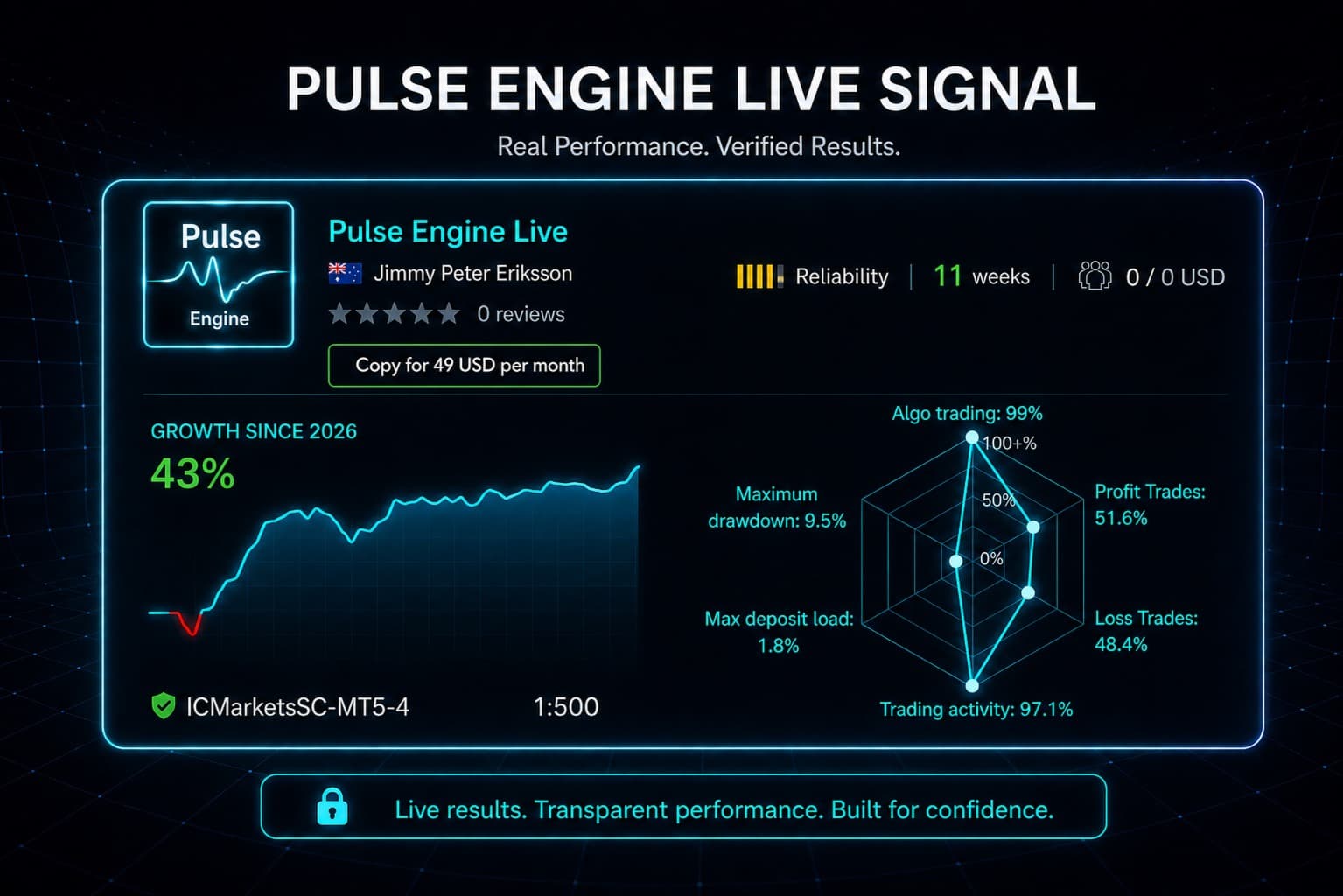
Author: Jimmy Peter Eriksson. In a field of grid/martingale products, Pulse Engine is a structural outlier: single-entry, hard stop-loss per trade, explicitly no grid and no martingale. For a professional, that structure alone warrants a second look — its drawdown is realized, not hidden inside floating positions.
Execution mechanism
It's positioned as an intraday time-of-day directional pattern system: pattern recognition flags hours when a market has historically shown a strong move, claimed across 70+ patterns and 6 markets (XAUUSD/USDJPY/EURUSD/GBPUSD/USTEC/BTCUSD), no indicators, timeframe-independent, with a stop loss on every trade, plus a randomization function and a news filter. In short: bounded single trades, no averaging.
Risk profile (the professional read)
Structural risk is bounded by the stop — its core edge over grid/martingale: losses are taken cleanly instead of ballooning as floating drawdown. What you should interrogate is the edge layer: the claimed advantage comes from ~20yr FX / 15yr index / 10yr crypto, "50,000+ trades" of backtest, but the page exposes no out-of-sample or walk-forward method. Time-of-day systems have two inherent weak spots: (1) sensitivity to broker server time (GMT offset) — set it wrong and the edge evaporates; (2) regime change inside the specific session windows can stop the historical pattern from repeating.
Account requirements (per the author)
| Item | Note |
|---|---|
| Symbols | XAUUSD / USDJPY / EURUSD / GBPUSD / USTEC / BTCUSD |
| Account | Hedging-capable preferred |
| Server time | Must match standard US-session offset (GMT+2/+3) — verify it |
| Risk reference | Author cites ~9% max drawdown as a suggested cap for prop-firm use |
Marketing vs mechanism
The page carries "most unique system anywhere" and scarcity/price-anchoring ("listed $1499, now $599"). Treat that as framing, not proof of value. The mechanism itself (single-entry, hard SL) is honest; what to doubt is not "will it blow up" but "does that edge survive out-of-sample."
Who it's for
For traders who reject grid/martingale, accept low frequency and realized losses, and can configure server time and the news filter correctly. Not for anyone chasing a "smooth up-curve" illusion — single-entry equity curves are jagged by nature.
Verify / start
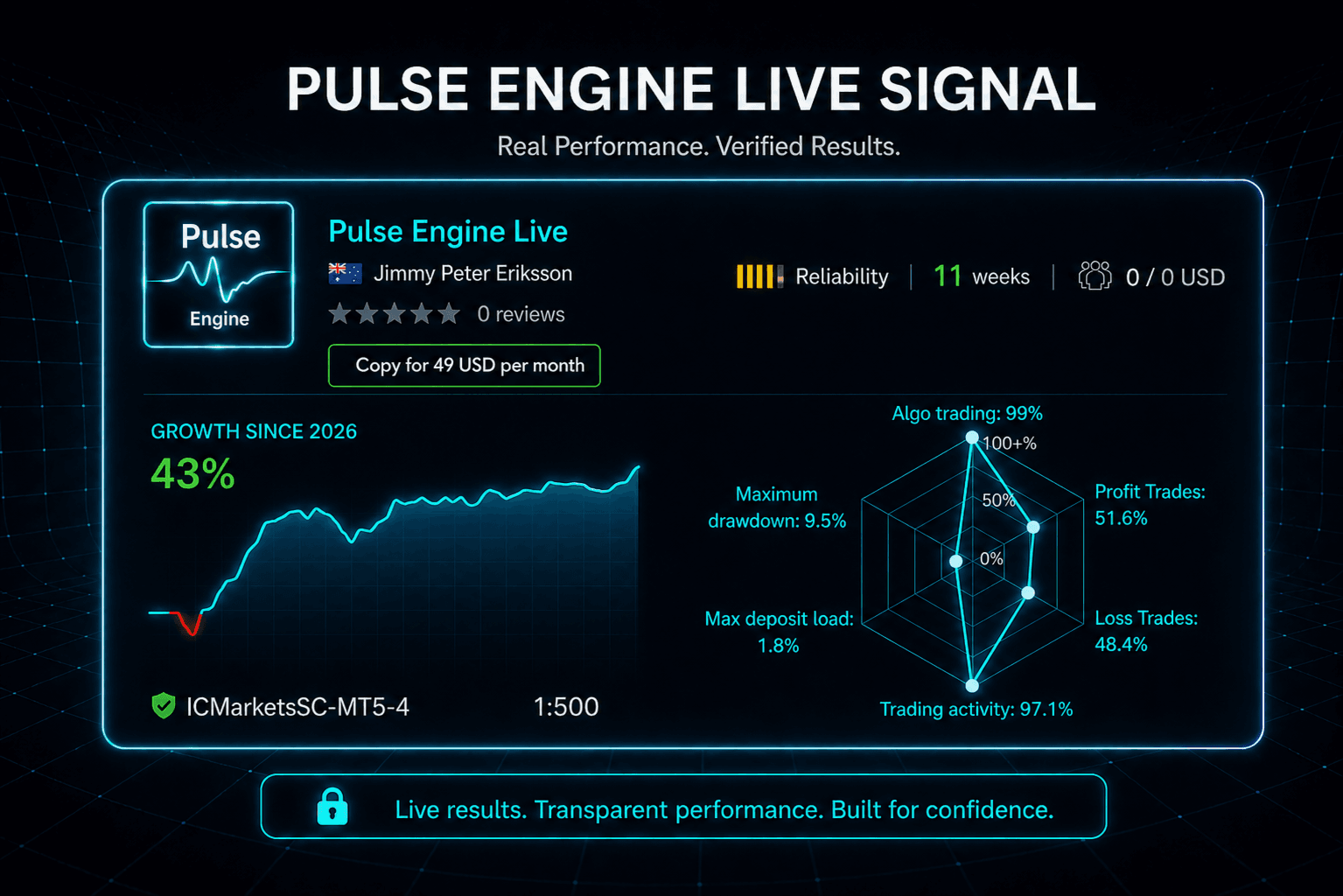
There's a live signal, but "has a signal" is not "verified": check its age, real-vs-demo status, and whether it matches the marketed config (method: Myfxbook guide). Current price on the product page (use WELCOME10 for 10% off). Backtest in your own server-time environment with our guide before going live; prefer hands-off? See managed accounts.
Disclaimer: this is a mechanism review, not investment advice. Any EA's historical/backtest performance does not represent future returns; trading is risky — use money you can afford to lose.
The EA reviewed here
Keep reading
A prop firm challenge is won on drawdown rules, not on returns. Which EA structures fit the rules, which are almost designed to fail them, and a selection checklist.
Gold is the most popular and the most punishing symbol for EAs. Here are 5 criteria, plus how our gold EAs differ and who each fits.