Waka Waka EA Review: Behind +12,000% Sits a Frank Martingale Grid
Waka Waka is a long-standing AUD-cross martingale grid that's frank about its mechanism. A professional take on why its high-return story must be read with the 50-72% drawdown.
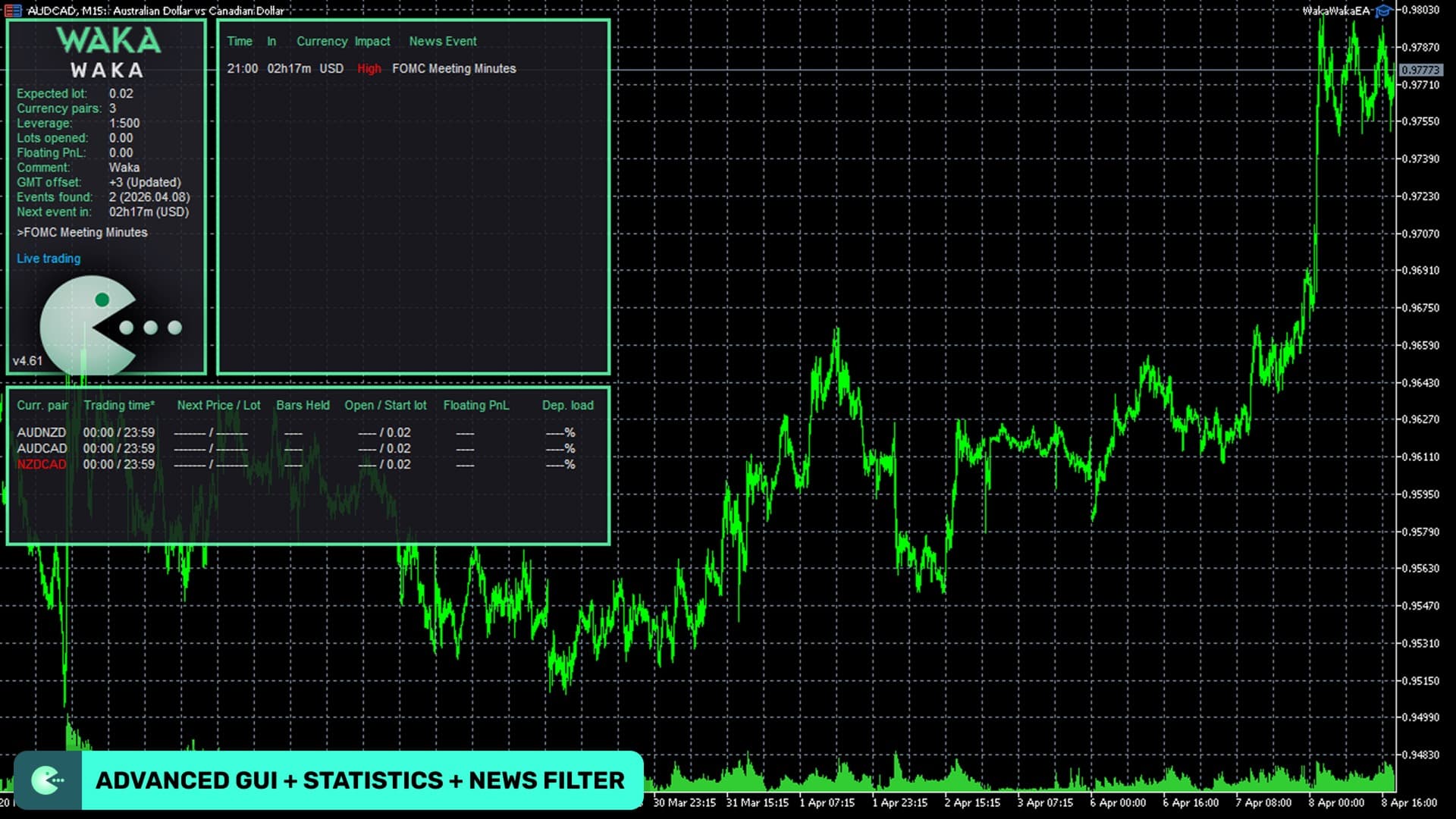
Author: Valeriia Mishchenko. Of the five, Waka Waka carries the highest structural risk — but it earns one point of respect: it doesn't hide it, plainly stating it's a grid with martingale-style sizing. Reviewing it professionally isn't about bashing martingale; it's about reading its return story alongside its risk numbers.
Execution mechanism
In the seller's own words: "grid (averaging) trades," with configurable lot multipliers for the 2nd through 6th+ entries; entries filtered by Bollinger period, RSI period and a maximum RSI; spacing set by "Trade Distance" (min step) and "Smart Distance" (volatility-adaptive); "Allow Hedging" permits opposing trades on the same symbol. Net: a mean-reversion grid that averages into losers with progressive lot multiplication. AUDCAD/AUDNZD/NZDCAD, M15, "one-chart setup" — a single M15 chart trades all symbols.
Risk profile (the professional read — key section)
This is the textbook martingale-grid blow-up profile: the basket keeps adding into a losing direction, and one sustained reversal swells floating loss and lot size together until margin gives. The seller does expose a "Maximum Drawdown Percent" parameter and Low/Significant/High risk presets — that's honest. But the key fact: reviewers report 50-72% drawdowns in adverse conditions, with a June 2023 trend washing out accounts on medium/high settings. The heavily marketed "8-year live, +12,000%" is a survivor result on low-risk settings — it and the 50-72% drawdown are two sides of one coin; reading the return without the drawdown is self-deception.
Account requirements (per the author)
| Item | Note |
|---|---|
| Symbols / TF | AUDCAD / AUDNZD / NZDCAD · M15 (one-chart setup) |
| Account type | Hedging account mandatory |
| Capital / leverage | Low-risk: $6,000+ @ 1:30; acceptable: $1,000+ @ 1:100 |
| Spread / VPS | Says not spread-sensitive, but advises a good ECN; VPS required |
Marketing vs mechanism
"+12,000% account growth" and "designed to exploit market inefficiencies, not fit history" — the former omits the matching drawdown magnitude; the latter is an unfalsifiable narrative. Note the author also writes that being well-capitalized and never raising risk are survival conditions — effectively admitting that with the wrong settings or too little capital, this is a time bomb. Its official MQL5 price sits in the high tier for an EA (near three thousand dollars, and stepped up with sales), anchored as "cheaper than alternatives."
Who it's for / not for
Only for people who fully understand martingale grids, fund far above the minimum, lock low-risk settings, and can withstand deep drawdowns or periodic washouts. Explicitly not for: small accounts, anyone wanting "steady and safe," or anyone who'll intervene at a 30%+ drawdown — that's how martingale accounts die.
Verify / start
Make drawdown your first metric: check the live signal's historical max drawdown and longest basket holding time before the return (method: verification guide). Current price on the product page (use WELCOME10 for 10% off). Strongly use the low-risk preset with excess capital and a long demo first. If what you actually want is someone watching the risk for you, see managed accounts.
Disclaimer: this is a mechanism review, not investment advice. Martingale/grid strategies carry extreme tail risk; "+12,000%"-type history is produced by low-risk survivor samples, while real drawdowns can reach the 50-72% range or higher and may lose your entire capital; past performance does not represent future returns — use money you can afford to lose.
The EA reviewed here
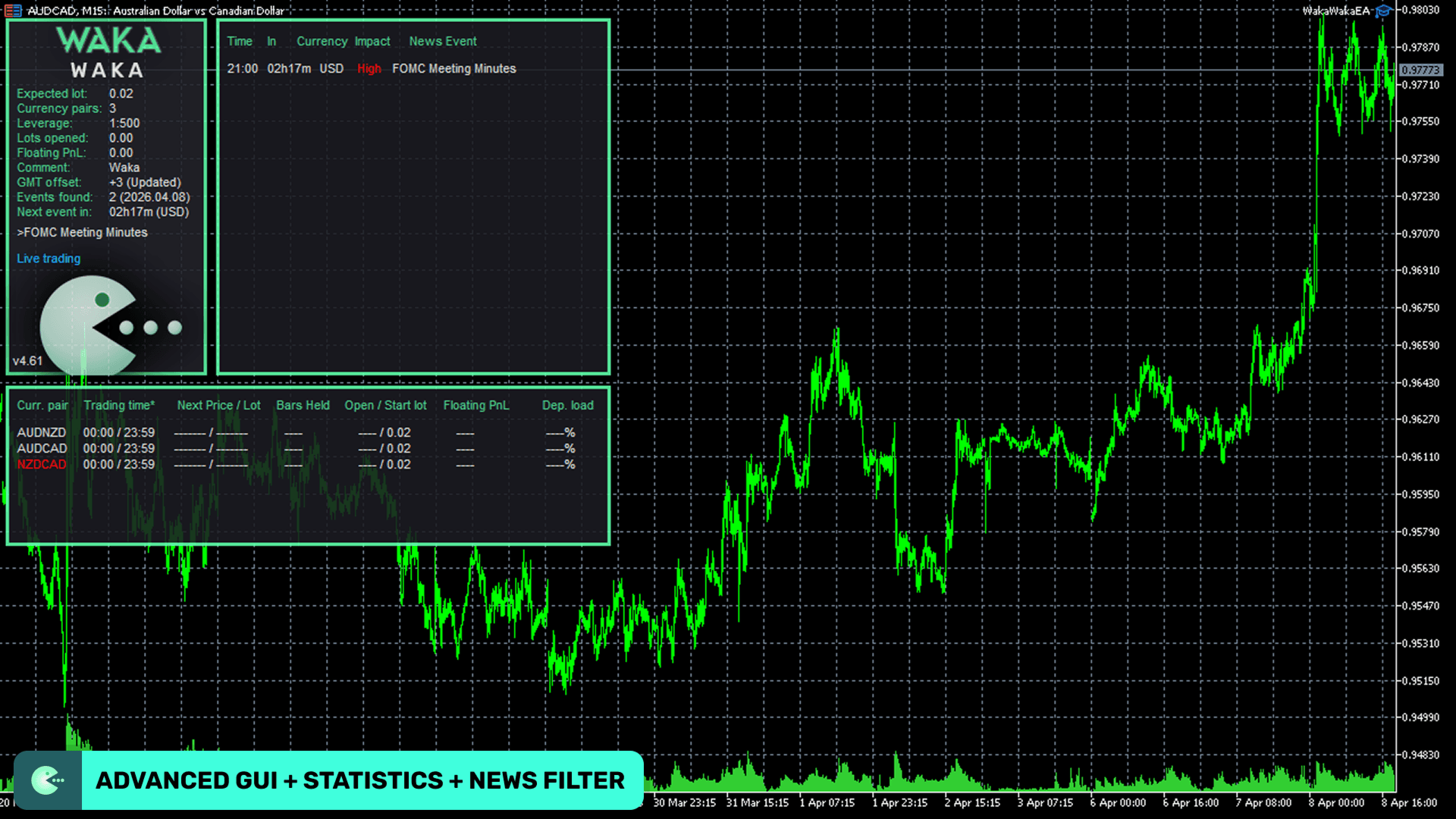
Waka Waka EA MT5
Smart grid · multi-pair evergreen
Keep reading
A prop firm challenge is won on drawdown rules, not on returns. Which EA structures fit the rules, which are almost designed to fail them, and a selection checklist.
Gold is the most popular and the most punishing symbol for EAs. Here are 5 criteria, plus how our gold EAs differ and who each fits.